Rafael Koch · 6 October 2026
Fishing Derby Success Signals Stronger Community Ties to Maple Creek's Reviving Ecosystem
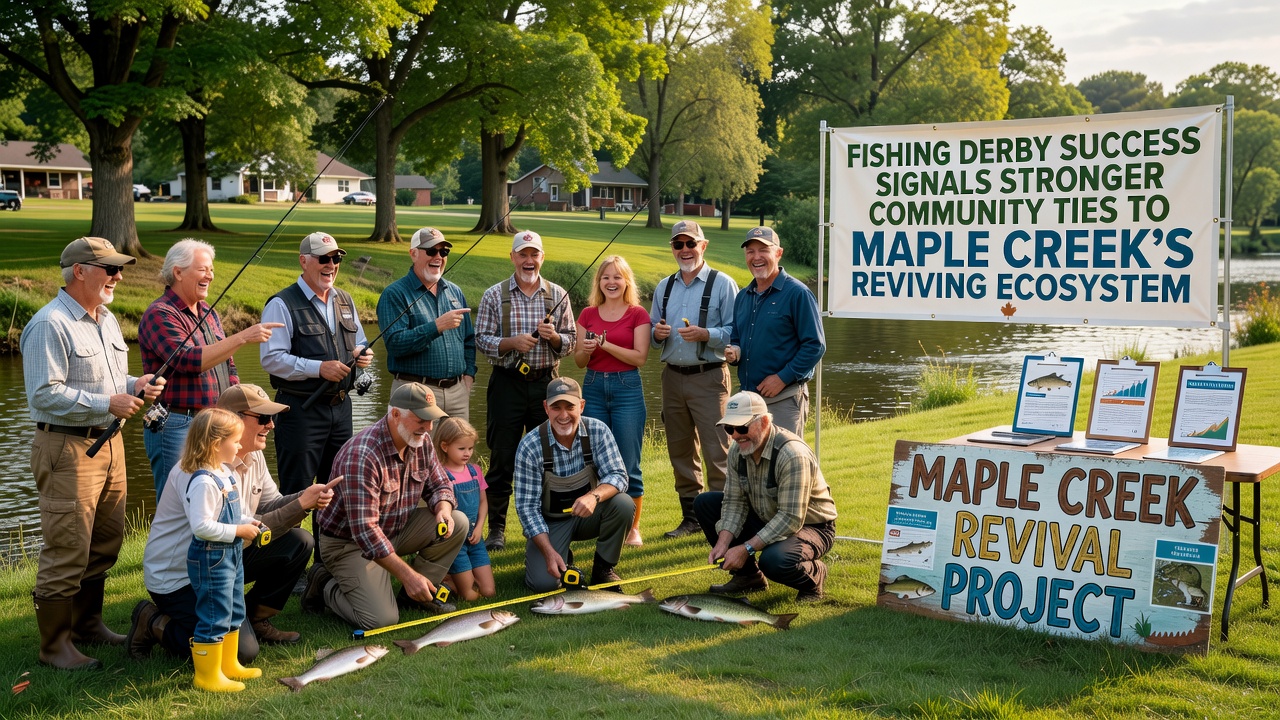
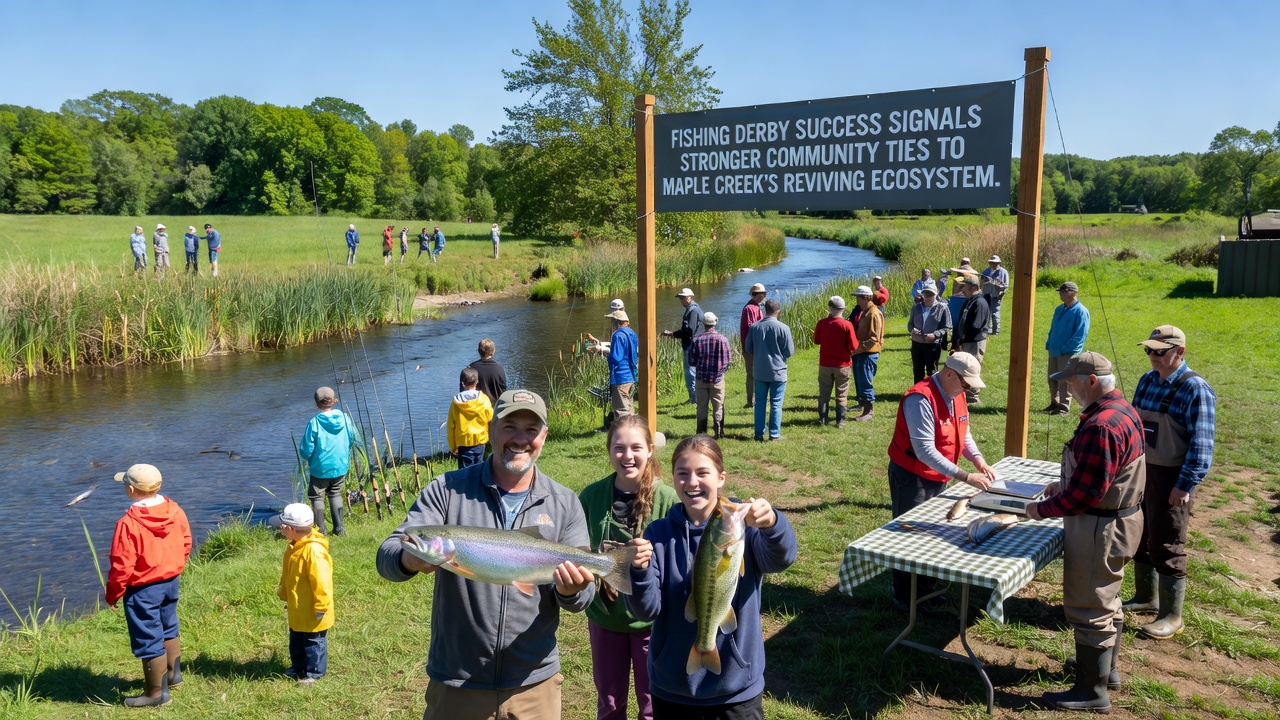
Maple Creek's annual fishing derby drew record participation in October 2026, with over 450 residents registering for the two-day event that combined recreational angling with data collection on local fish populations and water quality indicators.
Event organizers coordinated with local environmental groups to record catch data, including species diversity and size distributions, while participants noted observations about habitat conditions along the creek banks and surrounding riparian zones.
Event Scale and Participation Trends
The derby spanned multiple access points from the upper watershed near the town limits down to the confluence areas, and registration numbers increased by 35 percent compared to the previous year according to figures released by the Maple Creek Watershed Association. Volunteers set up stations where anglers could weigh and measure their catches before releasing most fish back into the water, while select samples underwent laboratory analysis for contaminants and growth patterns.
Youth groups from three area schools contributed teams that focused on catch-and-release techniques, and their documented findings aligned with broader trends showing improved recruitment rates for native trout species over the past three seasons. Equipment demonstrations highlighted low-impact gear options that minimize streambed disturbance, and local businesses supplied refreshments along with educational materials on seasonal fishing regulations.
Ecosystem Indicators and Recovery Data
Water sampling conducted during the event revealed dissolved oxygen levels averaging 8.2 milligrams per liter across monitored sites, a measurement consistent with improved conditions that support cold-water fish communities. Macroinvertebrate surveys completed by accompanying biologists identified 22 distinct taxa, including several pollution-sensitive mayfly and stonefly species that had been absent from earlier inventories conducted five years prior.
Vegetation restoration projects along eroded banks showed measurable progress, with planted willow cuttings achieving 78 percent survival rates in sections that received community maintenance efforts during the preceding spring. Sediment load reductions attributed to these plantings and upstream erosion controls have allowed clearer spawning gravels to reemerge in several reaches, supporting higher egg survival rates documented in recent fisheries assessments.
Community Coordination and Monitoring Networks
Local residents established informal networks that extended beyond the derby weekend, with several property owners agreeing to host permanent monitoring equipment that transmits real-time temperature and flow data to a shared online platform. These stations complement existing provincial programs and fill gaps in coverage between official gauging sites managed by Fisheries and Oceans Canada.
School curricula incorporated derby-collected datasets into science classes, allowing students to analyze year-over-year changes in species composition and correlate findings with precipitation records and temperature anomalies. Partnerships with regional universities provided training sessions on standardized sampling protocols, ensuring that volunteer contributions meet quality thresholds for inclusion in larger ecological databases.
Business sponsorships covered equipment costs and prize incentives, yet the emphasis remained on stewardship outcomes rather than competition results, and organizers reported that post-event surveys indicated 92 percent of participants planned to continue contributing observations throughout the year.
Broader Regional Context
Maple Creek's improvements reflect patterns observed across similar watersheds in the northern plains, where targeted habitat work combined with consistent community monitoring has produced measurable rebounds in fish biomass and diversity. Reports from the U.S. Environmental Protection Agency highlight comparable recovery trajectories in tributaries that received parallel investments in riparian buffers and angler engagement programs.
Cross-border data exchanges with Canadian agencies allow for comparative analysis of climate influences on creek hydrology, and the shared datasets help refine predictive models for future flow variations and their effects on spawning timing. The derby itself serves as an annual checkpoint that reinforces these connections and encourages ongoing participation from residents who might otherwise remain disconnected from formal monitoring efforts.
Conclusion
October 2026's fishing derby demonstrated how structured recreational events can integrate with systematic ecological tracking to strengthen local stewardship networks around Maple Creek. Continued coordination between residents, schools, businesses, and government agencies positions the watershed for sustained recovery, with each season's data contributing to adaptive management decisions that address both immediate habitat needs and longer-term climate considerations.